
Limb Lengthening Surgery
Limb Lengthening Surgery
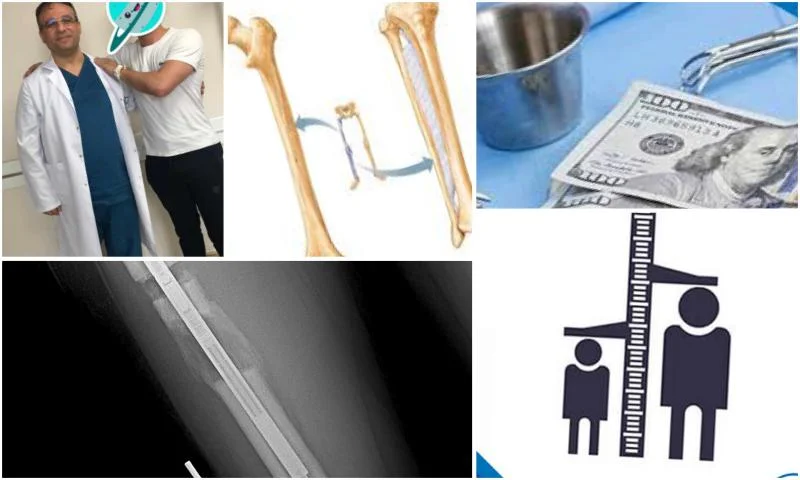
Limb lengthening surgery is a frequently encountered surgical procedure in recent times. It is an application applied to patients in cases where their height remains short for various reasons. You can get general information from the address. It is performed by orthopedic specialist surgeons. Limb lengthening surgery was first performed in 1950 by a specialist Russian professor doctor. The limb lengthening method was developed and started to be applied in European countries. The inclusion of Turkey among these countries led to a high demand from people who want to grow taller.
In Which Situations is Limb Lengthening Performed?
This method, generally applied for therapeutic purposes in individuals with closed growth plates, is a surgical operation applied for bone lengthening. General anesthesia is administered. Advanced methods and high-level materials are used. The foot bone to be applied is cut transversely. This process is done with a special machine. The resulting gap is fitted with a special plate. The attached metal ensures that the gap is filled. As it fills by ossification, the bone's length automatically increases. Approximately 1mm of bone tissue forms per day. The process of enabling bone formation by moving the bones apart is called distraction osteogenesis. Limb lengthening surgery is performed by applying surgical procedures to the femur or tibia. Recovery takes 20 days.
Limb lengthening surgery, caused by genetic and structural factors, is performed for the following reasons:
- Genetic factors
- Metabolic patients
- Chronic patients
- Patients who are physically disabled and have a limp as a result of an accident
- Patients defined as dwarfs with very short stature
- Patients with bone development issues